Are there any defenses to firearms crimes in Utah?
Cedar City, UT – There were news reports that a male suspect was arrested for a firearms offense in Utah.
Suspect fired at shotgun at a residence
A Springville, Utah resident was arrested after allegedly firing a shotgun multiple times toward a neighbor’s home during a property dispute [1].
According to authorities, deputies from the Utah County Sheriff’s Office responded to a weapons offense call on March 24. The victim reported that their neighbor had fired a firearm in their direction following an argument over property boundaries. The victim stated that after taking a photograph of the suspect from their own property, the individual began yelling obscenities and threatening to shoot or kill them. The two parties initially separated, but as the victim reached their front door, they heard gunshots and observed the suspect aiming a shotgun toward their residence. A total of three shots were reportedly fired, leaving the victim in fear for their life.
Deputies located and detained the suspect at the scene. A search of the suspect’s property and trailer uncovered three spent shotgun shells and the firearm near the trailer entrance. During questioning, the suspect admitted to retrieving the shotgun after becoming upset about being photographed. He acknowledged walking toward the neighbor’s property and firing three shots, claiming his intent was only to scare the victim into stopping any further interference, not to cause physical harm or death.
The individual now faces multiple serious charges, including aggravated assault, felony discharge of a firearm, threatening with or using a dangerous weapon in a fight, and disorderly conduct. He is currently being held without bail at the Utah County Jail.
This incident highlights the dangers of escalating neighborhood disputes with firearms, where perceived threats can quickly lead to criminal charges and potential long-term legal consequences, even when the shooter claims no intent to injure.

What potential defenses are available to this suspect under Utah law?
A suspect in this Springville, Utah case, charged with aggravated assault, felony discharge of a firearm, threatening with or using a dangerous weapon in a fight, and disorderly conduct, may pursue several potential defenses under Utah law. These primarily revolve around justification doctrines, lack of required intent, and challenges to the prosecution’s evidence. Success depends heavily on specific facts, witness credibility, and whether a pretrial justification hearing shifts the burden to the state.
The core defense strategy from the best criminal defense lawyers in Utah often centers on self-defense or defense of habitation under Utah Code § 76-2-402 and § 76-2-405. Self-defense justifies force when a person reasonably believes it is necessary to counter imminent unlawful force. Deadly force, such as firing a shotgun, is permitted only if the actor reasonably fears death, serious bodily injury, or a forcible felony. Utah’s stand-your-ground provisions eliminate any duty to retreat in places where the person has lawfully remained. A pretrial hearing allows the defense to present a prima facie case, forcing prosecutors to disprove justification by clear and convincing evidence. If successful, charges may be dismissed.
However, this defense faces significant hurdles here. The neighbor was on their own property taking a photo and had disengaged before the shots were fired. The suspect admitted walking toward the neighbor’s home and firing three rounds, stating the goal was merely to “scare” the individual to prevent further bother. Courts scrutinize whether any perceived threat was truly imminent and whether deadly force was proportional. Verbal obscenities or photography alone typically do not justify deadly force, especially after parties separated. If the suspect was the initial aggressor by escalating with threats and then retrieving a weapon, self-defense may be unavailable.
Defense of property or habitation offers another avenue but is limited. Utah law permits reasonable non-deadly force to prevent criminal interference with real or personal property (§ 76-2-406). Deadly force in defense of a habitation is justified only against unlawful entry or attack made violently, stealthily, or for committing a felony, with a presumption of reasonableness in qualifying cases. Firing toward a neighboring home during a boundary dispute, without evidence of trespass or imminent personal violence against the shooter’s dwelling, likely falls outside these protections. Deadly force purely to protect property, without threat to life, is generally not justified.
For the felony discharge of a firearm charge (often under provisions prohibiting shots toward a habitable structure with intent to intimidate or harass), the suspect may argue lack of specific intent. The statement that shots were fired only to scare, without desire to hurt or kill, could challenge the mens rea element. If the prosecution cannot prove intent to intimidate beyond reasonable doubt, or if the act qualifies as lawful self-defense, this count may weaken. The weapon and spent shells recovered bolster the actus reus but do not automatically establish prohibited intent.
Additional defenses include attacking the elements of each charge. Aggravated assault requires an act with unlawful force or violence using a dangerous weapon or likely to cause serious injury. The defense could argue no actual injury occurred and the conduct did not meet the threshold for aggravated rather than simple assault. Disorderly conduct and threatening with a weapon may be contested by emphasizing context, such as mutual escalation in a neighborhood dispute, or by questioning whether actions rose to criminal levels.
Challenges to evidence reliability, witness bias in ongoing property disputes, or inconsistencies in statements could create reasonable doubt. Voluntary intoxication or mistake of fact are rarely strong here but might be explored if applicable.
Overall, justification defenses like self-defense appear difficult to sustain given the suspect’s admission of initiating gunfire after the neighbor retreated and the absence of apparent imminent threat to life. Property defense is even narrower for deadly force. The case likely turns on whether a jury or judge finds the response reasonable under the totality of circumstances, including the property dispute’s history and the exact sequence of events. A skilled defense might negotiate reduced charges or leverage the stated lack of intent to harm, but outcomes vary by case specifics and judicial interpretation. Consulting a top criminal defense lawyer in Utah is essential, as these are affirmative defenses requiring evidentiary support.
Assistance with criminal charges in Utah
Are you looking for the best criminal defense lawyers in Cedar City, Iron County, and other parts
of Utah? If so, call 435-586-2718 to schedule a free consultation and discuss your case.
Firm contact info:
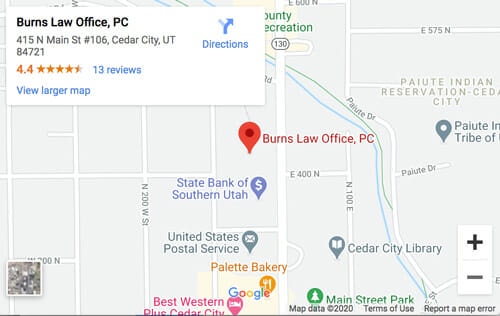
415 N. Main St., Suite 106, Cedar City, UT 84721
435-586-2718
jburns@burnslawpractice.com
Sources:
- https://www.abc4.com/news/crime/springville-man-firing-shotgun-neighbors-home/